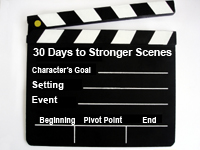
30 Days to Stronger Scenes Series: TOC

What has the most potential for improving your writing? Learning to write a strong scene; then making sure every scene in your story is strong. It’s not mandatory—there are good books written without strong scenes—but I find that beginning to intermediate writers are more likely to succeed with a strong scene structure. Fiction Notes works to help you write stronger, better stories that will result in a contract! Here are 30 posts about writing stronger scenes.

StrongerScenes250x150

SCENE 1: What has the Most Potential for Improving Your Writing?

SCENE 2: Elements of a Scene

SCENE 3: Scene v. Narrative

SCENE 4: Plan a Scene

SCENE 5: Beat Sheets

SCENE 6: Keeping Scenes on Track

SCENE 7: Showdown in Every Scene

SCENE 8: List of Possible Scenes

SCENE 9: Scene List v. Synopsis

SCENE 10: Plotting with Scenes

SCENE 11: Scene Cuts

SCENE 12: Avoid 5 Plotting Mistakes by Using Scenes

SCENE 13: Not Worthy of a Full Scene

SCENE 14: Omit a Scene

SCENE 15: How to Salvage a Scene

SCENE 16: Aiming for Bull’s Eye

SCENE 17: KaBlam! Dynamite Scenes

SCENE 18: Special Scenes: Flashback Scenes

SCENE 19: Special Scenes: Openings

SCENE 20: Special Scenes: Big Scenes

SCENE 21: Special Scenes: Set up big Scenes

SCENE 22: Special Scenes: Climax

SCENE 23: Special Scenes: Final Scenes

SCENE 24: Stories that Spaghetti

SCENE 25: 10 Scene Problems Solved

SCENE 26: All Dialogue Scenes

SCENE 27: Love Scenes

SCENE 28: Scene Length

SCENE 29: Dear-Editor Talks about Scenes

SCENE 30: Scene Checklist

Related posts:

Trackbacks

  1. [...] Check out Darcy Pattison’s month of tips on writing scenes – a real wealth of information here. She’s cataloged them all – amazing! [...]

  2. [...] 30 Days to a Stronger Scene Table of Contents [...]

  3. [...] 30 Days to a Stronger Scene Table of Contents [...]

  4. [...] 30 Days to a Stronger Scene Table of Contents [...]

  5. [...] 30 Days to a Stronger Scene Table of Contents [...]

  6. [...] 30 Days to a Stronger Scene Table of Contents [...]

  7. [...] 30 Days to a Stronger Scene Table of Contents [...]

  8. [...] 30 Days to a Stronger Scene Table of Contents [...]

  9. [...] 30 Days to a Stronger Scene Table of Contents [...]

  10. [...] 30 Days to a Stronger Scene Table of Contents [...]

  11. [...] 30 Days to a Stronger Scene Table of Contents [...]

  12. [...] 30 Days to a Stronger Scene Table of Contents [...]

  13. [...] 30 Days to a Stronger Scene Table of Contents [...]

  14. [...] 30 Days to a Stronger Scene Table of Contents Once you have a scene list, you need to decide which scenes to actually write. I’ve found it helpful to think about scenes as Zooms, or places where I want the reader to stop and spend some time noticing details. [...]

  15. [...] 30 Days to a Stronger Scene Table of Contents [...]

  16. [...] 30 Days to a Stronger Scene Table of Contents [...]

  17. [...] 30 Days to a Stronger Scene Table of Contents Before we go much farther in writing and plotting with scenes, I want to give you an example of keeping things on track in a scene. Here are 5 things to monitor as you write your scene. [...]

  18. [...] 30 Days to a Stronger Scene Table of Contents This is the great Show-Don’t-Tell debate. When should you take the time in a story to present a fully developed scene? [...]

  19. [...] 30 Days to a Stronger Scene Table of Contents SCENE 1, introduced the idea of scenes and its basic elements. Here, we want to break it down even more into elements that you can use. [...]

  20. [...] 30 Days to a Stronger Scene Table of Contents Here’s a basic template for planning a scene. Later, when you get ready to write the scene, you might want to list individual actions in what’s called a “beat sheet.” But when you’re just planning scenes, you want these basics. [...]

  21. [...] 30 Days to Stronger Scenes [...]

  22. [...] against prologues whose only purpose is to give back story. Instead, he prefers that a story start in present time with an immediate scene. And in general, I agree, while still reserving the idea that sometimes a dramatic prologue does [...]

  23. [...] Write a scene. When I finally get enough exploration done, I’ll go back and structure a real scene, concentrating then on dramatic structure and keeping the reader intrigued. [...]

  24. [...] a fight scene is an opportunity to reveal character as the characters interact in a physical way. As with any scene, there should be a beginning, middle and end and somewhere in there, a pivot point where the story [...]

  25. [...] must be a scene. When you write the Plot Point at the end of Act II, be sure to write a scene. Yes, your character probably decides to take some specific action, but thinking isn’t enough [...]

Speak Your Mind

*