When you have a full text of a picture book, it’s time to PLAY! After all, this is just a story for kids, right? Here are two ways to play with your story. You’ll be amazed at what you find out about the story when you do this:
Cut in Picture Book Text in Half
Count the number of words in the original. Write the story with EXACTLY half as many words as the original. Write it again with EXACTLY twice as many words. Notice what happens when you compress or expand a story.
When you edited out half the words, what’s left? Is the story gutted? Or just the descriptions? Did you manage to salvage the story at all?
Some things you might discover:
- You don’t need a character, a scene, a piece of dialogue.
- You cut out prepositional phrases in favor of adjectives.
- You cut adjectives and adverbs in favor of stronger, more exact nouns and verbs.
- The story is stronger when it’s shorter.
- The story lacks the emotional punch when it’s shorter.
- Cutting totally changes the story (for better or worse).
Usually, cutting a story in half is cutting too much, something is lost: action, characterization, language play. But usually, the story is stronger in many ways, too, because you were forced to evaluate every single word. Picture books allow for no fat!
The next draft of your picture book will probably be somewhere between your original draft and the half-length draft. Work with the text and story, trying to keep the writing as tight as possible, but still tell the story and tell it in the best way.
Work with the draft -editing, cutting and rearranging -until you are satisfied, then come back for the rest of this painful lesson.
Next, do Micro-cuts.
Find this Helpful? Read the Complete Series as an Ebook:
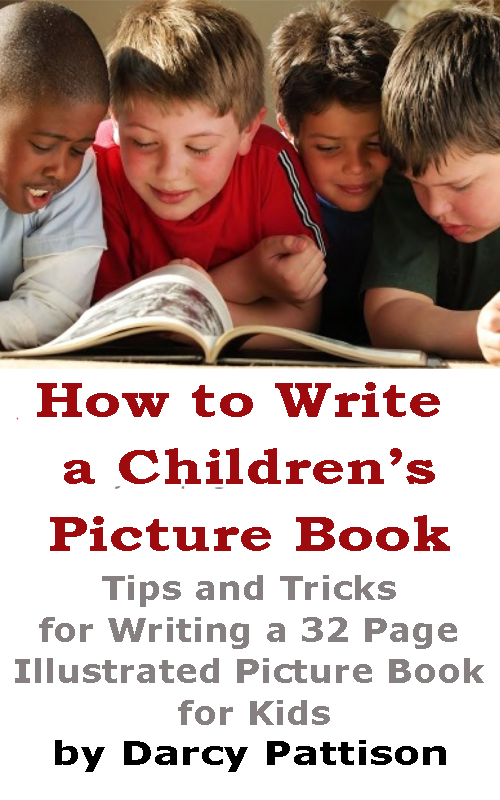
How to Write a Children’s Picture Book Available Now!The 30 Days to a Stronger Picture Book series has been collected into a Fiction Notes Ebook.
Available on
5 thoughts on “0”
Comments are closed.