Within the picture book genre, there are certain sub-genres and I’ll cover some of these in the next few days. Picture book biographies are hot commodities these days, but are very hard to get right.
How to Write a Picture Book Biography
Remember that picture books are 32 pages and are usually written for kids below ten years old. The problem is how to cover an entire lifetime in just 32 pages. Well, you can’t. Besides that, kids less than ten years old have lived most of their lives in the Twenty-first Century and won’t know that famous person you want to write about. Both topic and genre are against you.
Still, there are successful picture book biographies and they usually focus on the narrative arc and/or the emotional core of the person.
[convertkit form=4992784]
Narrative Arc

Wilma Unlimited: How Wilma Rudolph Became the World’s Fastest Woman by Kathleen Krull is the story of how the Olympic champion overcame childhood illness and became a world class athlete. The narrative arc here is strong: obstacle, obstacle, obstacle, success. It’s a classic plot line of a character who wants something, but faces obstacles, until there’s a resolution.
When considering a person as the topic of a picture book, look at the person’s life to find a narrative arc. Remember that picture books are a visual medium and think in terms of strong verbs and illustration possibilities.
Emotional Core
If you can’t find a narrative arc in the person’s life, then look for the emotional core of the person.
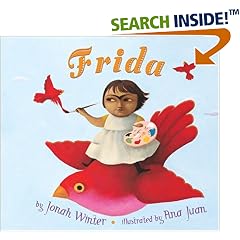
Frida, by Jonah Winter is organized around the idea that this artist turned her pain into art. It’s not so much the narrative arc that carries the book, as the build up of emotional impact on the reader. Again, look for the core of the person, illustration possibilities and a way to build the emotions.
Unsatisfying to Some Non-fiction Fans
Many picture book biographies are unsatisfying to those who often write non-fiction. “Just the facts, ma’am” doesn’t come through, especially for a biography that emphasizes the emotional core of the person. But really – how can you get a kid interested in someone who’s been dead for a long time? Especially, when you only have 32 pages. The audience for a picture book biography affects what you emphasize, even as you make sure you have the facts straight. Kids don’t care what the person DID; instead, you must engage kids with the person’s character and personality.
Jonah Winter’s picture book biography of jazz musician Dizzy Gillespie is a good example of a story that is lighter on the facts than some might like; yet, it received six starred reviews and connects with kids in a special way.

Find this Helpful? Read the Complete Series as an Ebook:
How to Write a Children’s Picture Book Available Now!The 30 Days to a Stronger Picture Book series has been collected into a Fiction Notes Ebook.
Available on
Thanks for writing this.